

Most people still think type 1 diabetes is something children get. The reality is that around half of all type 1 diagnoses now happen in adulthood — sometimes in your twenties, sometimes in your forties, sometimes much later. If you've just been diagnosed, the first thing to know is that you're not an unusual case. You're part of a growing group of people learning all of this from scratch, in adult life, with adult responsibilities.
Here's what tends to help in the first few weeks.
It's not the same as type 2, and you don't have to apologise
Adult-onset type 1 is often misdiagnosed as type 2 first. Friends and colleagues will assume the same. You'll get well-meaning advice about cinnamon, low-carb diets and "have you tried walking more". You don't owe anyone a medical explanation, but a one-liner helps:
"It's type 1 — autoimmune. My body stopped making insulin. I inject it now."
That sentence will save you a lot of conversations.
The first months are a learning job
For the first three to six months, type 1 is essentially a part-time job you didn't apply for. Carb counting, blood glucose patterns, insulin ratios, sick day rules, exercise effects, alcohol effects, stress effects. It's a lot.
What helps:
- Pick one thing at a time to get good at. Carb counting first. Then exercise. Then alcohol. Don't try to perfect everything in week two.
- Keep notes. Patterns that take six weeks to spot are obvious if you've written down what you ate and what your numbers did. A simple notes app on your phone is enough.
- Don't compare your numbers to anyone else's. The honeymoon phase, where your pancreas is still doing some of the work, gives you readings that won't last forever. Aim for your own trend, not someone else's chart.
The CGM changes everything
If your team has started you on a continuous glucose monitor, give it a fortnight before you have an opinion. The first few days are alarm-heavy and overwhelming. By week two you'll start to see how food, sleep, walking, stress and weather all show up in the data. It stops feeling like surveillance and starts feeling like information.
If you haven't been offered a CGM yet, ask. In the UK, eligibility for type 1 is now broad. Your diabetes team can talk you through Libre, Dexcom and the others.
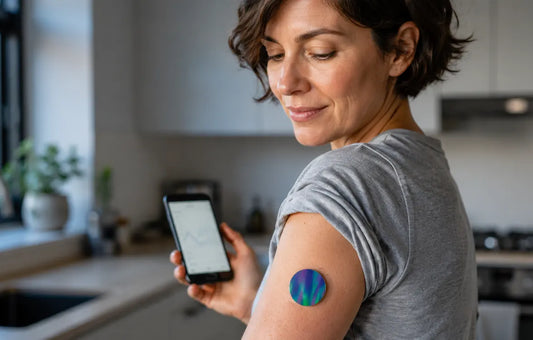
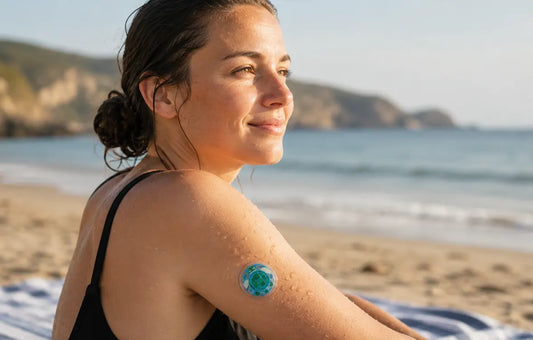
The sensor on your arm is visible. That's a choice you can make.
One of the things nobody warns you about is how often people ask "what's that on your arm?". Some weeks you'll feel like explaining. Some weeks you won't. Both are fine.
A patch on top of the sensor does two things: it keeps the sensor stuck on for the full session, and it shifts the question from "are you wearing a medical device?" to "I like your sticker". For some adults that's a relief. For others, a plain skin-tone patch is the whole point. Both work.
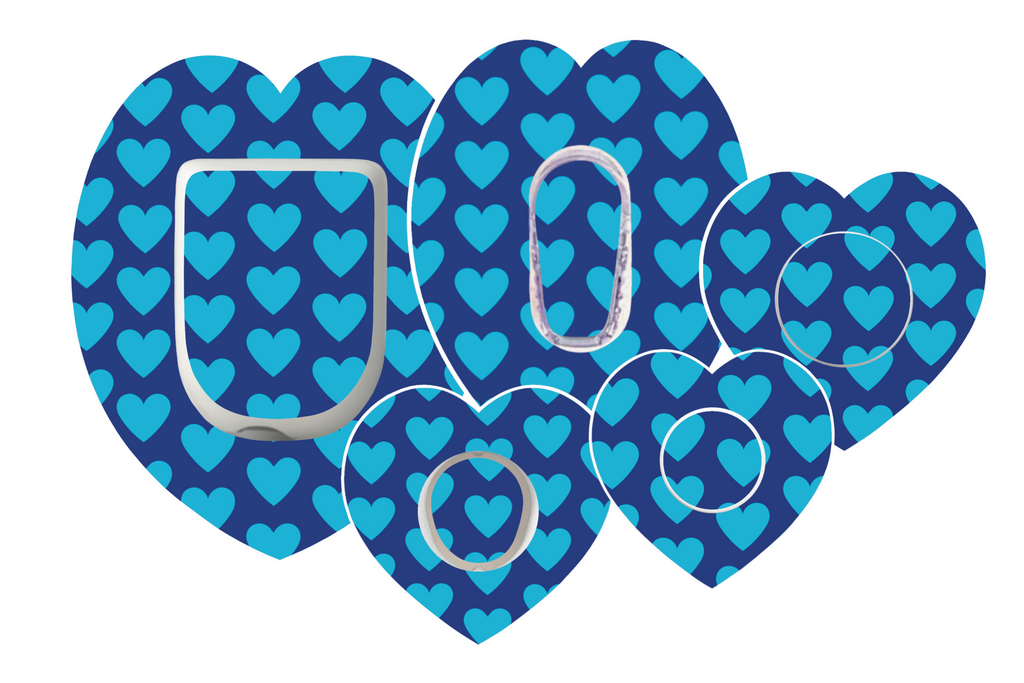
If you'd rather have something neutral, our heart-shaped and type 1 awareness collections include subtle designs. If you've decided to lean into it, our best-selling patches tend to be the bolder ones.
You can also find patches by device:
You don't have to do this alone
Type 1 in adulthood is isolating in a way the childhood version sometimes isn't — kids get a paediatric team and a community of parents around them, adults often get a 20-minute appointment every six months and that's it.
Look for the type 1 community online. UK charities like Breakthrough T1D have adult-specific resources and meet-ups. Reading other people's stories matters more than you'd think — Storm's story is one we keep coming back to.
The honest bit
The first three months are the hardest. The first year is hard. After that, type 1 becomes background noise most days — not because it gets easier, but because you get better at it. You'll still have bad weeks. You'll still get blindsided by a stubborn high or a low you can't explain. But you'll have the tools to deal with it, and the version of you a year from now will be remarkably calm about all of it.
Welcome to the club nobody wanted to join. It's a good club.