

Sending a child with Type 1 diabetes back to school always comes with a checklist that other parents don't have to think about. Somewhere on that list, right between "spare snacks" and "letter to the class teacher", sits the small but stubborn question of whether the CGM will stay on through five days of PE, playground and cardigan sleeves catching on doorframes.
Overlay patches are one of the few things you can add to the routine that both extends the life of a sensor and makes the sensor feel like less of a big deal to your child. This is a short guide to picking one that works for school life — not the marketing version, the honest one.
Why children need patch protection at school specifically
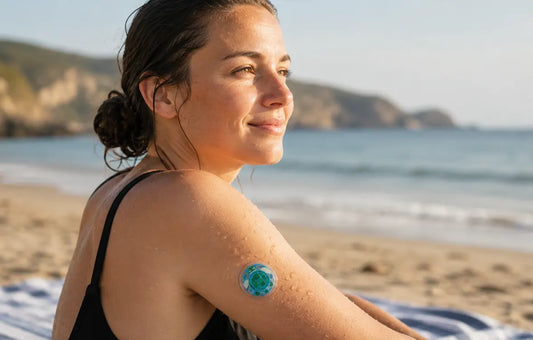
Home life is predictable. School life is not. In the space of a normal day at primary school, a Dexcom or Libre sensor might rub against a jumper, get bumped in a corridor, catch the rim of a rucksack, get lightly scraped in PE, get splashed in the toilets, and then get wet again if there's swimming or wet play. Most sensors are designed to cope with this, but their stock adhesive isn't always up to it — especially for kids who move a lot and sweat.
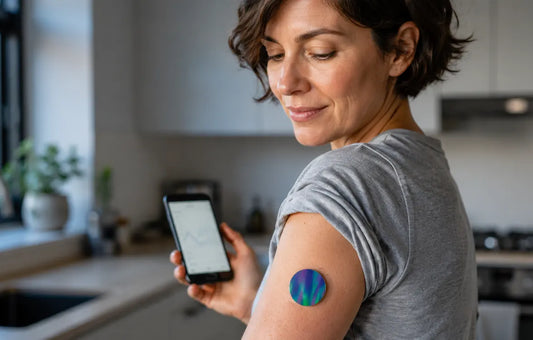
An overlay patch sits on top of the sensor housing, reinforcing the adhesive around the edges (not covering the reading area). Two practical wins for parents:
- Fewer sensor losses. A patch bumped on Wednesday morning is far more likely to still be there on Friday afternoon.
- Less "the sensor came off" hospital-run stress. Fewer emergency appointments, fewer weeks of running short on supply.
What kids actually want
The other reason patches work for children is emotional, not clinical. The sensor becomes something they pick out themselves — a shark, a rainbow, a Cookie Monster face, a spider — instead of a medical device stuck to their arm.
Children who feel their sensor is "theirs" are more likely to look after it, less likely to hide it, and less likely to feel self-conscious in changing rooms or at swim class. That's not a small thing when they're the only kid in a class of 30 wearing one.
By device
Dexcom G6 and G7
For children on Dexcom, the biggest school-day concern is the sensor lasting the full 10 days. Sweaty PE kits and rough uniform fabric are the two things that most often lift the edges of the stock adhesive. An overlay patch cut to fit the exact model — G6 (vertical or horizontal) or G7 — adds a soft edge that holds through the whole session.
Browse designs kids love in our Dexcom Patches for Kids collection.
Freestyle Libre 1, 2 and 3
Libre sessions last 14 days, which is a long time for a small round adhesive to stay on a growing child. The round Libre sensor is easier to catch on a jumper edge than the flatter Dexcom, so patches for Libre are especially useful. All our patches come sized to fit either Libre 1 & 2 (same size) or Libre 3.
See the Libre Patches for Kids collection for kid-friendly designs.
Omnipod
Omnipod children have the shortest patch cycle — 3 days — but the Pod is worn on a body that keeps moving. School kids on the Pod benefit from an overlay for exactly the reasons above: sports, wet play, uniforms. Pick horizontal or vertical orientation to match how your child wears it.
Browse the Omnipod Patches for Kids collection.
Application tips for the school-week routine
The two things that make a patch last longest at school are almost embarrassingly simple:
- Clean, dry skin before you stick. A wipe with a barrier prep pad or plain soap-and-water, then completely dry. Sensor changes on a Sunday evening after bath time are ideal.
- Press for 30 seconds. Not a quick press. A proper 30-second warm-hand press around all edges. This is where most short-lived patches actually fail.
For the full application guide, see our Patch Care page.
What to tell your child about the sensor at school
Different children want different things. Some want the biggest, brightest design because they're proud of the sensor and happy to answer questions. Others want the most muted colour possible so nobody notices. Both are correct answers. The best thing you can do as a parent is let them pick their own patch — even if it's the least tasteful design in the range — because a sensor they chose is a sensor they'll wear without complaining.
Related reads for T1D parents
- First Sensor Change: A Survival Guide for New T1D Parents
- How Long Do CGM Patches Last?
- Being a Parent of a Child with Type 1 Diabetes
Or browse the full Kids Patches collection across all devices.