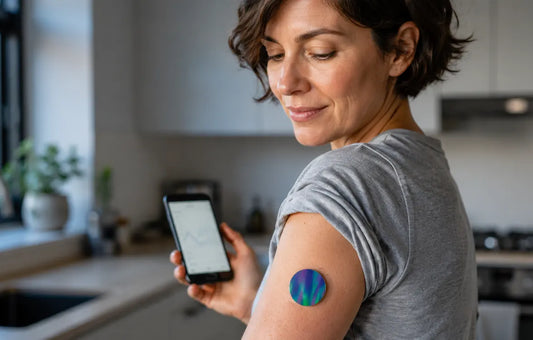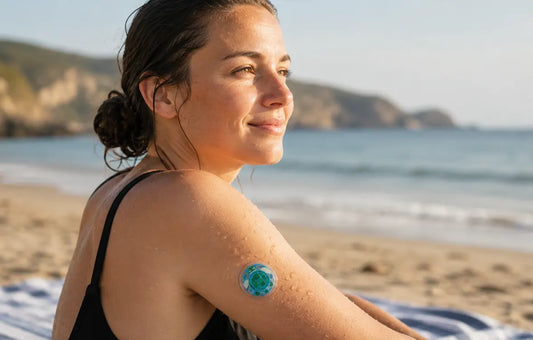


Every summer we get the same message from customers: "Can I actually swim wearing this?" And every summer we give the same nuanced answer: "Yes — and here's what to know before you jump in."
The word "waterproof" gets thrown around too easily in the CGM patch world. Some manufacturers claim their patches are fully waterproof. Some claim IPX ratings they don't actually have. And some — us included — use the word carefully because a small overlay patch stuck to your skin is a very different thing to a diving watch.
This is the honest guide to what waterproof CGM patches actually do, what they don't, and how to make one last through a real summer.
What "waterproof" actually means for CGM patches
Your CGM sensor itself is water-resistant to whichever IP rating the manufacturer gave it. Dexcom G7 is IP28. Freestyle Libre 3 is IP27. Omnipod is IP28. These ratings mean the electronics inside can handle submersion for a limited time and depth — enough for showers, baths, pools, and short sea swims. Your patch does not change these ratings.
What a good overlay patch does is keep the sensor housing stuck to your skin when the adhesive is compromised by water. Wet skin, chlorine, salt, sun cream and rough drying all shorten adhesive life. A patch on top adds a second layer of grip so the whole thing doesn't peel off after your third day at the beach.
So: waterproof-designed patch = better hold in water. Not = magical shield that changes what your sensor can survive.
The three water scenarios that actually matter
1. Showers and baths
These are the everyday test. Warm water, some soap, some steam. A fresh patch applied to clean dry skin will handle this without issue for the full session (10 days for Dexcom, 14 for Libre, 3 for Omnipod). Two habits help:
- Don't scrub directly over the patch with a sponge or flannel. Let water pass over it.
- Pat dry gently instead of rubbing with a rough towel.
2. Swimming pools
Chlorine is more corrosive to adhesive than plain water. A patch on day 8 of a 10-day Dexcom session will handle a swim, but the edges may start lifting sooner than they would without the pool. If you swim daily, expect the last 2–3 days of the sensor to feel less secure.
3. Sea and beach
This is where patches earn their keep. Salt, sand and drying off after a swim create the biggest lift risk. Two things that make the difference between a sensor that survives a two-week beach holiday and one that comes off on day 4:
- Rinse the patch with fresh water after any sea swim (this washes off salt and sand).
- Pat dry — don't rub — because rubbing is what actually catches an edge and starts a lift.
By device
Dexcom (G6 and G7)
Dexcom sensors handle water well. The overlay patches in our Waterproof Dexcom Patches collection are cut to fit both G6 (vertical and horizontal) and G7. Sea, beach and summer designs picked for warm-weather wear.
Freestyle Libre (1, 2 and 3)
The round Libre sensor is smaller than most people think, so an overlay patch with a properly-sized cut-out is important — if it's too tight it lifts. The Waterproof Libre Patches collection covers all three Libre generations.
Omnipod and Omnipod DASH
The Pod is already water-resistant. What patches add for Omnipod users is edge grip during the 3-day cycle. Our Waterproof Omnipod Patches collection has Pod-shaped designs in horizontal and vertical orientation.
Four common mistakes that ruin a patch in water
- Applying to slightly damp skin. Even a bit of humidity kills the initial bond. Wait until skin is fully dry — not "dry enough".
- Not pressing long enough. 30 seconds firm press, warm hand, all the way around. This is the biggest reason patches fail early.
- Sun cream on top of the patch. Apply sun cream around the patch, not over it. Oils in some sun creams dissolve adhesive.
- Rubbing dry with a towel. Pat, always pat. Rubbing is a physical peeling action.
The full collection
Browse designs picked for beach, pool and summer in the Waterproof CGM Patches collection — sharks, mermaids, sea turtles, Hawaii prints, waves and more. All available for Freestyle Libre, Dexcom, Omnipod and Medtronic Guardian.