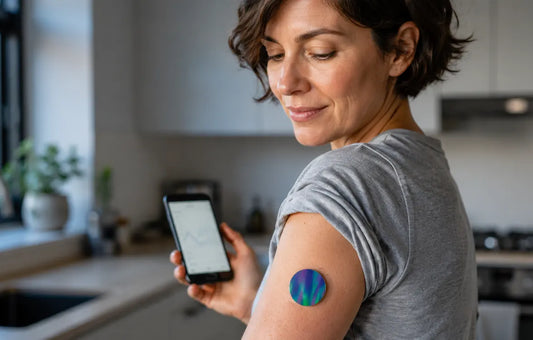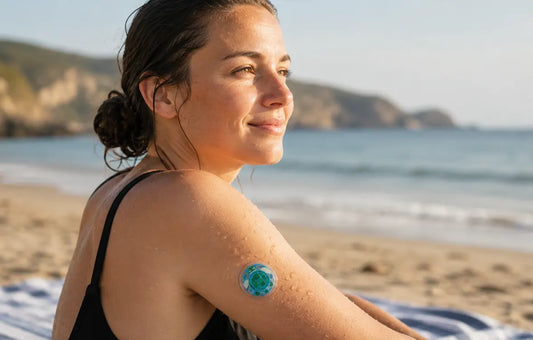


Summer brings the part of the year a lot of people with diabetes secretly dread: how do you keep the sensor on at the pool, the beach, or just in the shower after a long day?
Most CGMs are technically rated as water-resistant. In practice, anyone who's worn a Freestyle Libre, Dexcom or Omnipod through a real summer knows the official rating and what actually happens are two different things. The edges lift. The sticker turns translucent. The sensor falls off two days into your holiday.
We sell patches that help with this. We also sell the truth about when patches do and don't make a difference. Both of those things are in this post.
What "water-resistant" actually means on your sensor
The official ratings, straight from the manufacturers:
- Freestyle Libre 2: rated IP27 — may be submerged in one metre of water for up to 30 minutes.
- Freestyle Libre 3: rated IP28 — handles immersion longer and deeper than Libre 2.
- Dexcom G6 and G7: rated IP28 — designed for showers and swimming up to 2.4 metres for 24 hours.
- Omnipod 5: rated IP28 — manufacturer states showering, swimming and tub bathing up to 7.6 metres for up to 60 minutes.
- Medtronic Guardian Sensor 3: showering and bathing only, not rated for swimming.
Here's the catch: IP28 ratings come from controlled lab conditions. Real-world variables — sun cream, chlorine, salt, sand, skin oils, friction with swimwear — wear down the adhesive, not the sensor itself. The sensor doesn't usually fail. The sticker does.
Where things actually go wrong
From years of customer feedback, there are three real failure points:
- The first 30 minutes after applying. Adhesive needs to bond. People go straight to the pool, this never happens, and the sensor lifts that same night.
- Sun cream and oils. Most sun creams contain ingredients that dissolve medical adhesive. SPF on the sensor edge means peeling within 2-3 days.
- The drying step. Most adhesive failures happen not in the water, but afterwards. The edge stays wet, lifts, catches on a towel, and that's it.
What actually keeps the sensor on
Three things, in order of impact.
1. An overlay patch
An overlay sits on top of the existing sensor adhesive, reinforcing it from the edges in. It doesn't touch the sensor reading area. For most people, a patch turns "sensor lasted 6 days out of 10" into "sensor lasted the full session."
Shop by your device: Freestyle Libre Patches, Dexcom Patches, Omnipod Patches, Medtronic Guardian Patches, or browse our wider Insulin Pump Patches range.
2. Application technique
- Clean skin with soap and water. Dry it completely.
- Apply at least an hour before any water exposure.
- Press firmly for 30 seconds around the edges.
- Don't stretch the patch as you apply it.
3. Aftercare
- Pat the sensor area dry after swimming or showers — don't rub.
- Avoid applying sun cream directly over the sensor; go around it.
- If you're at the beach, rinse the salt off when you get home.
What doesn't help:
- Adding more medical tape on top — it creates more edges that lift.
- Spray-on bandage products — they often dissolve sensor adhesive.
- Anti-perspirant under the patch — irritates skin and weakens adhesion.
Which patch design for which kind of swimming?
Not all swimming is the same. A few specifics that come up a lot:
- Pool swimming (chlorine): any overlay patch works. Chlorine fades the design colour slightly after multiple sessions, but adhesion holds.
- Sea or open water: salt is harder on adhesive than chlorine. Patches still hold for a full sensor session in most cases. Rinse with fresh water afterwards.
- Hot tubs and sauna: the heat is the issue, not the water. Adhesive softens above 40°C. Limit time and pat dry immediately.
- Long sun exposure plus swim: the combination is what wears patches out fastest. UV breaks down the colour, water tests the adhesion. For week-long holidays, expect to change the patch at the same time as the sensor.
For kids and active swimmers, customers most often pick designs from our Kids Patches collection — bright, bold, and built for kids who don't slow down. For sunny, summer-themed designs, browse our Summer Collection, or see what's most popular in our Best Selling range.
Honest limits of what a patch can do
A patch is a reinforcement, not a guarantee.
- It doesn't make the sensor "waterproof beyond rating." The manufacturer rating is the manufacturer rating. We don't change that.
- It doesn't help if the sensor itself failed inside. If you got a dud sensor, no patch saves it. That's a Dexcom, Abbott or Insulet support call, not a sticker problem.
- It won't stick if your skin or the sensor weren't prepped properly. Greasy skin, wet skin, sun cream residue — the patch will lift in hours.
- It won't last forever. A single overlay patch is designed for a single sensor wear cycle. Past that, replace.
If a patch comes off in the first 24 hours, get in touch — that's not normal use and we'll sort it.
Quick checklist for a swim day
- Apply sensor and patch at least 1 hour before water.
- Skip sun cream on the patch area. Apply around it.
- Press firmly around the edges before swimming.
- After swimming, pat the patch dry — don't rub.
- Rinse off chlorine or salt with fresh water when you get home.
- Don't add extra tape on top — let the patch do the job.
Frequently asked questions
Can I swim in the sea with a Dexcom G7?
Yes. The G7 is rated IP28, which covers most recreational swimming. An overlay patch keeps the adhesive secure through salt water, sun cream and sand. Rinse with fresh water when you get home and pat dry.
Will a patch stop my Libre falling off at the pool?
In most cases, yes. The Libre's stock adhesive can lift in chlorinated water; a patch reinforces it from the edges in for the full 14-day session.
Do I need a special "waterproof patch" or do normal ones work?
Our patches are designed to handle swimming, showers and sweat. We don't separate them into "waterproof" and "non-waterproof" because the material is the same. The design is the only difference.
Can my child wear one for swimming lessons?
Yes. We have a dedicated Kids Patches collection for younger CGM users — same material, designs they're more likely to want to keep on.
My Omnipod fell off in the pool last summer. What happened?
Most likely the stock adhesive lifted at the edges before swimming and the water finished the job. An overlay patch around the pod's base usually fixes this for the full 3-day pod cycle.
Ready for summer
A bright patch turns a piece of medical kit into something that's part of your summer. Whether you're at the pool, the sea or just doing more outdoor than usual, the patch is there to keep the sensor where it should be — on you.
Browse our Summer Collection, shop by your specific device — Freestyle Libre, Dexcom, Omnipod, Medtronic Guardian — or see what everyone's picking up in our Best Selling range.
Related reading
For a deeper look at what "waterproof" actually means for CGM patches, the IPX ratings by device, and the four common mistakes that ruin patches in water, read our Waterproof CGM Patches guide.