

It's that time of year when the focus is once again on diabetes. November is an opportunity to raise awareness of Type 1 diabetes and get the word out that this is not an easy condition to live with, neither for the person who has it nor for their families.
And right in the middle of the month is World Diabetes Day on November 14th — a day to recognise everyone living with diabetes and the people working towards better treatment, support and awareness.
The Type 1 vs Type 2 Confusion (Still Our Biggest Hurdle)
I am always personally astounded by the complete lack of knowledge from the general public. I try to educate at every opportunity, and the confusion between Type 1 and Type 2 is always the first hurdle. Sometimes I wish they would change the name of Type 1 diabetes to differentiate. Autoimmune Diabetes would be a better name, I believe. I always start with:
"It's an autoimmune disease. The body destroyed its own cells that produce insulin. It was not caused by lifestyle or diet."
Then I look into the face of a person who still doesn't know what that means. It can be tiring and lonely when you open up about the struggles you face, only to be met with disbelief.
If You Could Really Listen, This Is What I Would Tell You
Waking my child up in the middle of the night for the umpteenth time, to save their life with glucose, is exhausting. The fight or flight response being triggered multiple times a day to ensure my loved one's safety takes its toll. No, it REALLY takes its toll.
Trying to figure out how to adjust insulin to minimise lows but control the highs is an impossible task. I can only ever make a good guess based on what I've learned. And even then, the unpredictable absorption and use of insulin by the body, affected by exercise, fast carbs, slow carbs, mood, growth hormones and even the weather, makes it highly likely I got it wrong. Getting it wrong comes with the penalty of endangering my loved one's life. The responsibility is enormous, and I carry this weight each day and night, while trying to live a positive, happy and productive life. Sometimes I hide it well. Other times I look frazzled and lost.
So when you ask with genuine kindness, "Are they stable yet?", I want to cry out and shake you and let you know:
"No, this is it. They will never be 'stable'. It will be a battle, day and night, until a cure is found. I too am in disbelief that there is no better, safer treatment in 2023."
Type 1 Is a Second Job That Never Stops
Type 1 is like having another job that never stops, and you cannot take a day off no matter how tired you are. When you lay down to get the sleep you so desperately need, it isn't allowed, it isn't possible. You must get up and attend to the blood sugar, because the consequences are too great if you do not. You feel this exhaustion in your bones, it is so deep, and your brain is foggy from the hundreds of extra decisions being made every single day.
Shall I wait to give insulin? Should I give less because they are more active today? They are under the weather, do they need more or less insulin? They are excited or angry, do they need more? It's hot, I need to reduce the insulin. They want pizza, and that means the food is slow-release carbs, so the insulin must be delayed. The thinking and guesstimating never stops.
The photo below is of a person demonstrating the extra decisions they made due to Type 1 in a single day. It is enlightening to see this, because these decisions are usually hidden inside our brains.

Every Meal Is a Calculation
Every meal and snack, we have to calculate the carbohydrates in the food so we can correctly dose the insulin. Giving too much is easy to do, and a simple error in a calculation can result in a serious low blood sugar, or even be fatal. Just think about that. Every meal, every single day, for the rest of your life.
The image below has been borrowed from another mother of a Type 1 diabetic. It really brings home just how little margin for error there is when dosing insulin.

I personally find it anxiety-inducing to have this level of responsibility each day for my child. I also find that other people simply cannot comprehend the level of caution required when looking after a child who is dosing themselves. People's ignorance of why I am checking and supervising my child is a constant conflict. I cannot seem to get across the seriousness of allowing a child to be solely in charge of their own insulin. You wouldn't give a child a packet of painkillers in their school bag, but my child has insulin at hand every day.
It's Not Just Insulin: The Full Work of T1D Care
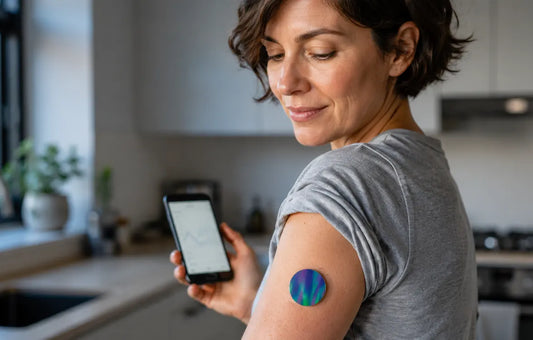
The overwhelm does not stop there. There is also the ordering of medical supplies, of which there are many. If you are fortunate to have an insulin pump, there is changing the infusion site every three days. Wearing blood glucose monitors that read blood sugar, so you don't have to draw blood from the fingers, means changing those devices every 10 to 14 days without fail. It is work to keep my child healthy, and it requires constant attention and effort. You cannot take your eye off the ball, because the ball is their life, and there is no dropping it, even while you sleep.
If that wasn't enough, there are the many hospital, dental and optician appointments needed to maintain my child's health. But all of this is nothing compared to the emotional burden it takes on my child and family. It seeps into every crack of my family, affecting relationships and dynamics. Trying to manage the toll it can take on my child's mental health, and their siblings', and of course my own. It is a lot more than simply giving insulin.
World Diabetes Day: Celebrating Insulin, Hoping for a Cure
The 14th of November is World Diabetes Day, and I will celebrate the discovery of insulin and feel the magnitude of that discovery, knowing full well it saved my child's life. But I also look to the future, for the next chapter, the next breakthrough we so desperately need to take away the burden of living with Type 1.
I really do believe a functional cure is on the horizon, and I dream of the day my child is free from all of this. I pin my hopes on the fantastic work of Breakthrough T1D (formerly JDRF) in raising awareness and bringing people together to collaborate, so the elusive cure is finally found. We wait patiently until that day arrives.
How You Can Support Type 1 Diabetes Awareness
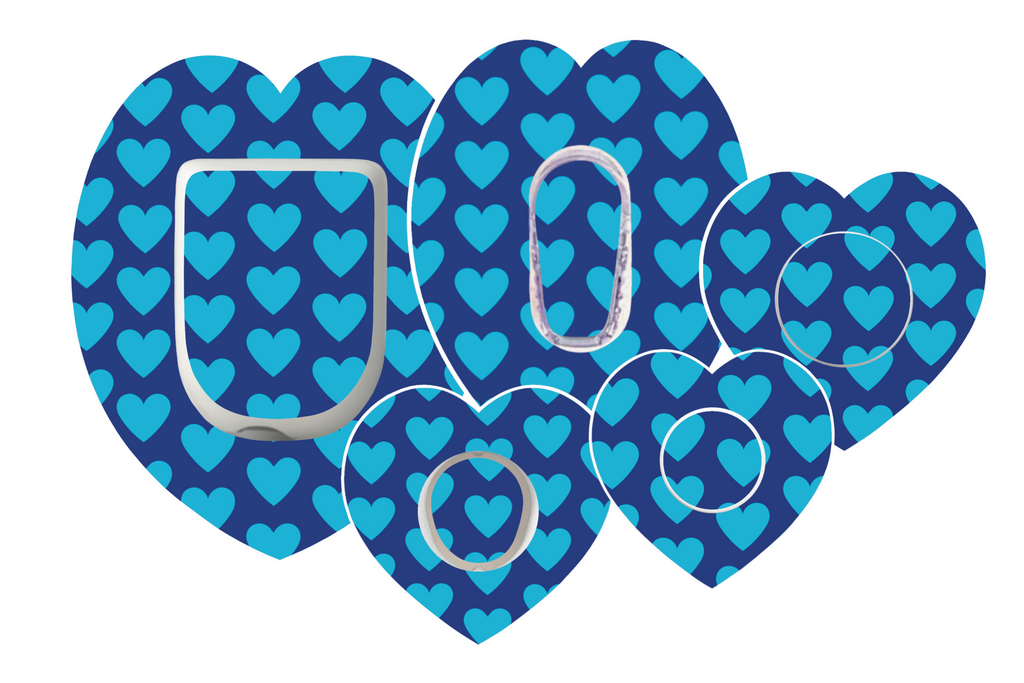
If this story resonates with you, the simplest way to support the cause is to talk about it. Share what Type 1 really means with people who don't know yet. At Smile Sensors, our Charity Bear patches donate proceeds directly to Breakthrough T1D, and our T1D Awareness patches are designed to start exactly the kind of conversations that change minds, one sensor at a time.